https://zenodo.org/records/19695379

Author: Sergey Skrynnik
Publication Date: 2026-04-21
Version: 12.0
Publication Platform: Zenodo
Language: Russian (with parallel translations into English and Kazakh)
Abstract
The work proposes an interdisciplinary hypothesis on the origin of dimensions based on the phenomenon of a “wave over a wave.” The world is interpreted not as a stage, but as a process, with frequency as the primary entity. Time is introduced as a count of repetitions of a cyclic process, while the concept of dimension arises from the need for an unambiguous description of the system’s state: projecting a cycle onto a linear scale leads to a loss of phase information, which requires the introduction of an additional coordinate. The increasing complexity of the process (phase scaling according to the law 2ⁿ) gives rise to quadratic dependencies, which, in perception, manifest as different physical quantities, possibly related by the relation pₙ ∝ p^(2^n), where the exponent equals 2 raised to the power of n. On this basis, a unified sequence is constructed that connects time, space, mass, and energy.
Within the proposed framework, bidirectional scaling is introduced, leading to the emergence of a fractal organization of levels. For the observer, fractality manifests not as a continuous scale of sizes, but as transitions between adjacent levels — from smaller to larger scales or vice versa. This principle applies across different physical quantities, although the mechanisms underlying the formation of the corresponding structures may differ.
The work is divided into two complementary parts: a formal model, where the main propositions are derived using mathematical apparatus, and a philosophical interpretation, which develops the same ideas in a freer form, attributing to consciousness an active role as an emitter and exploring possible connections with the wave nature of reality, fractality, and the resonant structure of the universe.
Keywords:
fractality, resonance, dimensions, space, process, phase, energy, change, consciousness, source
Methodological Note
It is important to immediately clarify the methodological feature of this model. The main formula for the birth of dimensions is:
If we apply this dependence to our physical perception of the World, then:

- ν₀ → base frequency (observer)
- n=1 → first dimension — Time (Order)
- n= second dimension — Space (Structure)
- third dimension — Mass (Intensity)
Each step *n* in this sequence corresponds to the birth of a new physical category perceived by us as time, space (meters) or mass (kilograms).
Key clarification: Within each emerged quantity we use the usual linear scale (1, 2, 3…), which allows us to measure them by standard methods. However, the relationship between the categories themselves (the transition from time to space, from space to mass) is non‑linear and scalable. Therefore, in the fundamental equations of genesis the equality signs are replaced by proportionality (∝), and dimensions may not match in the conventional SI sense, because they describe the process of transforming one essence into another.
Why does the dependence x ∝ t² arise? In classical kinematics such a relation describes uniformly accelerated motion. But in this ontological model it has a deeper meaning.
If time is the counting of cycles, then space is the dynamics of the unfolding of those cycles. For a static observer, the process of the birth of space appears as a continuous change in the rate of expansion. An analogy: just as acceleration is the change of velocity over time, here space is the “acceleration” of time. Hence the quadratic dependence is not an error of dimensionality, but an indication that space is a dynamic derivative of the time process. Or simply put – acceleration is a process of change (the emergence of non‑linearity in the reference scale in space) associated with the category of space. Therefore, the proportionality relation describing the transition from time to space will indeed be through acceleration, i.e., linked to t².
Consciousness perceives each emerging quantity through a linear scale (the abstraction of numbers 1, 2, 3…). This is necessary for the possibility of comparison and measurement. However, this linearity is a property of our perception (the measuring instrument), not a property of the birth process itself. Therefore, when we write down the relationship between quantities, we see a conflict between the linearity of the scale and the non‑linearity of genesis. This is resolved through scaling coefficients (2π, powers of two), which show how many “units of meaning” of the previous level are packed into one unit of the next level.
Introduction: The World as the Harmony of Integers
1. Intuitively
Traditionally, the world is seen as a stage on which events unfold over time. However, we can ask a different question: what remains if we remove the very concept of time as an external scale?
What remains is a process.
If we consider the surrounding reality, one of the most universal types of processes is repetition — cyclicity. Such processes can be observed at various levels, from oscillations to rotation. This suggests that the basis of description might not be space and time as independent entities, but a repeating process.
If a certain process repeats, we can start counting it: first cycle, second, third. Thus order arises. It is from this order that the concept of time can be introduced — not as a predetermined quantity, but as a result of counting repetitions.
In this approach, the world ceases to be a “place” and begins to be viewed as a structure of interconnected processes.
2. Formally
Consider a closed process that can be described as a set of states:

where θ is the state parameter within the cycle.
The evolution of the process is given by the mapping:

Repeated application of the mapping defines a sequence of states:
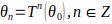
Here the parameter n specifies the order of repetitions of the process and can be regarded as an internal scale for ordering states.
Thus, “time” in this model is not introduced initially, but arises as a parameter for numbering the repeating process.
3. Interpretation
In this approach, the key idea is that:
- the primary thing is not space nor time
- the primary thing is repeatability (process)
Time becomes not a fundamental entity, but a derivative — a way of describing the order of changes.
This differs from the traditional physical approach, but does not directly contradict it; rather, it suggests a more basic level of description.
It is important to emphasize that at this stage the model does not introduce specific physical quantities (such as mass or energy), but forms the minimal structure necessary for further construction.
The Birth of Dimensions
1. Intuitively
Consider a repeating process — a cycle. As long as we describe it “from the inside,” everything is unambiguous: each state differs from another.
In practice, however, we rarely observe the process in its entirety. More often we see only its projection — some simplified mapping.
For example, if we represent a cyclic process as motion along a circle, observing it through a single coordinate (like a shadow on a line) causes different states to appear the same. We lose part of the information — in particular, information about the phase.
This means that one parameter is insufficient to describe the state of the system.
To eliminate this ambiguity, we must expand the description — add another independent coordinate.
In this sense, a new dimension arises not as an “additional entity,” but as a necessity: without it, states cannot be distinguished unambiguously.
2. Formally
Consider the cycle:

Suppose the observation is carried out through the projection:

This mapping is not one‑to‑one. For a single value of x there are infinitely many values of θ:

This means a loss of information about the state of the system.
To restore unambiguity, an additional coordinate is introduced:

Then the state is described by a point:

Such a representation is one‑to‑one.
3. Interpretation
The obtained result can be interpreted as follows:
- a cyclic process contains hidden phase information
- projection onto one coordinate destroys part of that information
- to preserve it, an expansion of the description space is required
Thus:
- a dimension arises as the minimal expansion needed to preserve complete information about the state of the system.*
This can be generalized:
- when the description is insufficient, a new coordinate is required
- this coordinate forms an additional dimension
Importantly, in this approach dimensions are not given in advance, but arise as a consequence of the structure of the process and the way it is observed.
4. Connection with the further development of the model
The considered example is basic. However, it demonstrates the principle:
- simple cyclicity → requires 2 coordinates
- more complex transformations → may require higher dimensions
This opens up the possibility of considering a hierarchy of dimensions as the result of the complication of processes and their mappings.
Wave upon Wave and Scaling
1. Intuitively
The previously considered cycle defines the basic level of a process — uniform repetition.
However, a more complex situation can be considered: when the process changes relative to itself. In other words, the next level of the process is built on the basis of the previous one, but with a different scale.
This can be imagined as a “wave upon a wave”:
- there is an original cycle
- on top of it arises a faster or more complex process
- meanwhile, the original process begins to be perceived as a “form” rather than as a change
Such a layering causes the system to exhibit more complex behavior than simple repetition.
The main point here is not the fact of repetition itself, but the change of the process scale.
2. Formally
Consider a mapping that changes the phase scale:

This means that in one step the system undergoes twice the phase change.
Observed projection
If we consider the projection:

then after applying F:

Using the identity:

we obtain:

3. Interpretation
Here an important result emerges:
- the quadratic dependence appears as a consequence of changing the phase scale
That is:
- we do not introduce the square “by assumption”
- it emerges from the structure of the transformation
Physical meaning
This allows interpreting “wave upon wave” as:
- a transition to a faster or more complex process
- in which the previous level becomes a “background”
Key idea
If the first level is given by the phase θ, then the second level works with the transformed phase 2θ.
This leads to:
- enhancement of differences
- appearance of nonlinearity
- complication of structure
4. Generalization
We can consider a sequence of transformations:

Each step:
- increases the “frequency of changes”
- complicates the observed structure
5. Connection with the idea of dimensions
Earlier it was stated:
- a dimension arises as a way to preserve information
Now we can say:
- the complication of the process increases the requirements for description
- this may lead to the necessity of new dimensions
Connection with Physical Quantities
1. Intuitively
So far, an abstract model has been considered:
- there is a process (cycle)
- there is its observation (projection)
- there is complication (scaling)
Now the question arises: how can this be related to physical quantities?
In classical physics, parameters such as:
- time
- space
- mass
- energy
are used. Usually they are introduced independently and then connected by equations. However, an alternative approach can be considered: trying to understand whether these quantities can arise as different manifestations of one and the same process.
Intuitively one might assume:
- time is connected with the ordering of changes
- space — with the structure of states
- mass and energy — with the intensity and nature of interactions
Thus, physical quantities can be seen not as independent entities, but as different ways of describing a single process at different levels.
2. Formally
At this stage, physical quantities cannot be strictly derived from the constructed model. However, a general principle of correspondence can be stated.
Let:
- n be the level of process scaling
- θₙ = 2ⁿθ be the corresponding transformation
Then the observed quantity may depend on the level as follows:

where Fₙ is some function reflecting the change of scale.
3. Interpretation
At this level, only cautious conclusions can be drawn.
3.1. On time
Within the model:
- time corresponds to the parameter n
- that is, the count of changes
this agrees with the idea: time is the order of events, not an independent entity.
3.2. On space
Space arises as:
- a way to uniquely specify a state
- through a set of coordinates
in this sense, space is connected with the necessity of resolving ambiguity.
3.3. On mass and energy
Only an assumption can be made:
- more complex or rapidly changing processes
- may require more “description”
- and manifest as inertia or energy
But: this is still a hypothesis.
Interpretation and the Role of the Observer
1. Intuitively
Up to this point, the model considered processes and their description without reference to an observer. However, in reality any description is linked to perception.
We do not have direct access to the “process itself” — we observe only its manifestations through certain parameters. At the same time, the method of observation influences which properties of the process become distinguishable.
If observation is carried out through a limited number of coordinates, part of the information is lost. Expanding the description (introducing new dimensions) allows this information to be restored.
From this perspective, the observer can be seen not just as an external element, but as a system that:
- interacts with the process
- identifies stable structures within it
- forms the observable picture
2. Formally (boundaries of the model)
In the constructed model, the observer is not explicitly introduced. However, its role can be described through mappings:

where:
- S is the state space of the process
- P is the method of observation (projection)
Then:
- the choice of P determines which parameters are accessible
- insufficiency of P leads to loss of information
- expansion of P corresponds to an increase in the number of dimensions
The observer in the model is not a physical object, but is represented through an observation operator.
3. Interpretation
3.1. On the role of observation
The observed reality depends on:
- the structure of the process itself
- and the way it is observed
This means that the “picture of the world” is the result of their joint action.
3.2. On consciousness
The following interpretation can be considered:
Consciousness can be understood as a system that implements a certain way of observing and interacting with processes.
It is important to note:
- this is not part of the formal model
- it is a level of interpretation
3.3. Why this is important
Such an approach allows:
- not to introduce consciousness as a physical quantity
- but also not to ignore its role entirely
5. Final Interpretation of the Whole Work
Now everything can be assembled into one idea:
5.1. Basic level
- there is a process (cyclicity)
- time arises as a count of changes
5.2. Description level
- observation is given by a mapping
- projection may lose information
- restoration requires additional coordinates
*Dimensions arise *
5.3. Complexity level
- scaling of the process leads to nonlinearity
- more complex structures appear
5.4. Perception level
- the observable picture depends on the method of observation
- the role of consciousness can be considered as interpretation
6. Bidirectional Scaling and the Fractal Organization of Levels
In the previous sections, scaling of processes was considered as a mechanism of structural complexity leading to the emergence of new levels of description. However, the introduced transformations allow not only an increase in the rate of change, but also an opposite direction.
Alongside the transformation of the form:
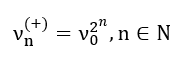
one can also consider the inverse transformation:
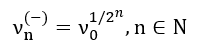
which corresponds to transitions toward slower processes and larger characteristic scales.
Thus, relative to a base level, two mutually inverse directions of scaling arise:
- toward increasing complexity and higher frequencies;
- toward slower processes and larger-scale structures.
Despite the difference in direction, the functional form of the relationships remains unchanged. This implies that the underlying laws governing the system are invariant across levels, while only the scale of parameters changes.
Such a property allows for an interpretation in which the structure of the system exhibits self-similarity. In other words, similar organizational principles may manifest across different levels, distinguished by their characteristic frequencies and scales.
This reflects the fractal nature of the model.
It is important to emphasize that this does not imply an identity of objects across different levels, but rather a similarity of the principles governing their formation and interaction. The specific physical mechanisms may differ, while the structure of relationships between parameters remains analogous.
Within the framework of the previously introduced mechanism for the emergence of dimensions, this means that each new level not only introduces an additional degree of freedom, but also reproduces the overall structure of transformations at a different scale.
Thus, fractality in the present model arises as a natural consequence of bidirectional scaling of processes.
6.1 Limited Observability and the Relativity of Elementary Structures
Within the framework of the proposed approach, it is necessary to clarify the status of elementary objects. Although the model allows for bidirectional scaling and, consequently, a fractal organization of structure, the observable picture at a given level remains limited by the employed concepts of measurement and the conditions of their interpretation.
For an observer belonging to a specific level of description, there exists a natural boundary below which the structure does not manifest as a collection of distinct elements, but is instead perceived through other characteristics, such as mass. In this sense, an elementary particle represents the minimal stable configuration accessible to observation within a given level.
In the direction of increasing perceived scale, analogous structures may form (defining the upper bound of the observable range), possessing principles of organization similar to those of elementary particles. However, their formation and observable manifestation are determined by different conditions and factors. As a possible example, cosmological structures (such as galaxies, with certain reservations) may be considered, although this analogy is limited.
The consideration of fractality across subsequent levels should not be interpreted as a continuation of a single scale of spatial dimensions. For the observer, such transitions manifest not as a change in scale, but as a transition to different physical quantities and modes of description. For example, spatial characteristics may transition into characteristics interpreted as mass.
A change in the base frequency effectively implies a redefinition of the reference with respect to which the hierarchy of levels is constructed. Since physical quantities (time, space, mass) correspond to specific values of n in the relation , a change in ν₀ leads to a situation in which the same mathematical structure (for example, the level n=2) may manifest as space for one observer and as mass for another. This does not imply arbitrariness of physical laws, but rather indicates that the attribution of an observed quantity to a particular category depends on the choice of the reference frequency associated with the system of perception.
At the same time, the concept of a base frequency plays a significant role. Its selection defines the perceived physical picture. A change in the base frequency leads to the formation of structurally similar descriptions; however, when compared, inconsistencies arise between physical quantities: what is interpreted as space in one case may correspond to time or another characteristic in another.
Thus, for the observer, fractality manifests itself as a transition between two adjacent levels — from a smaller scale to a larger one, or vice versa. This is valid across different physical dimensions, while from a physical standpoint the mechanisms underlying the formation of the corresponding “elementary structures” may differ.
7. Conclusion
In the present work, a model is proposed in which dimensions are not predefined, but emerge as a consequence of the structure of processes and the methods used to describe them.
A cyclic process is taken as the fundamental basis, from which, through projections and their inherent limitations, the need arises to expand the space of description. This leads to the formation of new levels, interpreted as dimensions.
The scaling of processes, implemented through nonlinear transformations, results in increasing structural complexity and the formation of a hierarchy of levels of description. In this context, two mutually inverse directions of scaling can be identified, corresponding to both the increase in the rate of change and its decrease.
The preservation of the functional form of relationships under such transformations allows for an interpretation in which the structure of the system exhibits self-similarity. In this sense, fractality may be regarded as a natural consequence of the scaling of processes.
Within the framework of the model, physical quantities are interpreted as manifestations of the corresponding levels of organization of processes. However, their rigorous quantitative derivation requires further investigation.
The role of the observer is not included in the formal part of the model, but may be considered at the level of interpretation, associated with the choice of the descriptive framework and the identification of a base level.
Philosophical Approach
The following section is not a logical continuation of the formal model, but represents an independent philosophical view that uses the same initial intuition but makes bolder assumptions about the connection with physical quantities and consciousness. It can be regarded as a direction for further development.
I did not make two separate articles. The approaches largely overlap, but there are also distinctive features. The philosophical version contains more intuition and possible explanations, which can set a vector for further research that is not always obvious from the mathematical calculations. Also, dry mathematics is not always capable of expanding the field studied by science, in this case physics. For expansion, prerequisites and a break from accepted embedded entities are needed, which is quite a natural process for philosophy.
The academic version presented above already contained an intuitive presentation, but this version contains aspects more important for philosophy — setting a possible further direction.
Introduction: The World as a Harmony of Integers
Traditional physics is accustomed to viewing the world as a stage (space) upon which events unfold in time. However, if we remove the external concept of time, what remains? What remains is process.
Based on observations of the surrounding World, one can hypothesise that the most common process is the wave. The main parameter of waves is considered to be frequency. At its core, frequency is simply a number. If we take one completed cycle as unity (1), then the entire surrounding world turns into a complex interference pattern built on integers.
Here a hypothesis is put forward: The World is not a place, but a state of resonance. Consciousness here is not a passive observer. It is an active emitter with its own reference frequency. A formed standing wave cannot be seen otherwise. Only active interaction with it will reveal its structure. To do this, one must enter into resonant interaction with the existing frozen form.
The Birth of Dimensions
First of all, it should be noted that in this hypothesis the concept of dimensions, while echoing those accepted in physics, also differs from what is taken as the basis. Four‑dimensional space‑time is not taken as the foundation. Instead, dimensions are associated with the physical quantities that characterise the world — time, space and mass. In other words, a different view of dimensions is proposed. In official physics, two physical quantities are combined into a single whole — space (extension) and mass (a measure of inertia) into a single connected object — which gives a description through the curvature of space‑time. In this hypothesis, these are different physical entities. This allows space and mass to be described as distinct entities without the need to introduce curvature. The possibility of the existence of other dimensions is not excluded, and the principle of their formation is predicted. Our perception depends on the level of development of our consciousness. The superposition of two wave structures forms the visible picture.
The question of the nature of dimensions remains one of the most fundamental both in physics and in understanding the spiritual world. In the proposed model, dimensions arise as a consequence of the emergence of the phenomenon of a “wave over a wave”.
Frequency is a scalar physical quantity that characterises the intensity of repetition of a periodic process (event).
Frequency (f or ν) is the number of complete cycles (events) per unit of time.
One might raise the question of whether it is possible to define frequency without introducing time as an external parameter. If there is a certain cyclical change, it can become the benchmark for establishing the base frequency and time—the birth of the unit. The initial state can be interpreted as the absence of change (a conditional «zero» of the process). From that point on, mathematics comes into play. We already have 0 and 1, and we have frequency characterized by time. This marks the birth of the first physical quantity: time. It is equally important that this gave rise to the concept of the «standard» (benchmark) and the source.
A base frequency ν is set. The concept of time is born. A change in frequency relative to the reference can lead to the emergence of various interconnections. Against this background, the phenomenon of resonance stands out. A unit frequency will resonate with all integers. Starting from two and above, one can observe an interesting process of interaction between frequencies related by the formula ν₁ = ν₀², where ν₀ ∈ ℤ excluding 1. This resonant connection has very interesting properties. The number one falls out of this series because squaring it returns it to itself. For it, the formation of different dimensions is impossible. However, it has a resonant connection with all the others. It is the beginning, the standard.
Metaphorically, this process can be characterized as the formation of a wave with initial parameters over itself. The original process emerged from zero, from a state of balance. The process repeats, shifting to a different scale. An illusion is created where the primary process appears frozen relative to the secondary one. It can be said that the primary process has acquired a form in relation to the secondary: it becomes balanced, losing the notions of change and curvature, and begins to be perceived rectilinearly. The secondary process, in terms of geometric description, can represent a circle for the rectilinear process—its absolute opposite. This leads to a limitation in the ability to describe the secondary process through the primary one. A division of the process into «before» and «after» becomes manifest.
Processes occurring on a circle can be expressed through linear parameters using standard relations involving π, with any required accuracy. However, such a description has a fundamental limitation: a linear scale does not provide a one‑to‑one correspondence with the state of the system.
In particular, if the state of the system is specified by a phase θ, then when switching to a linear coordinate (for example, through projection), an infinite set of values of θ differing by 2πk (where k ∈ ℤ) corresponds to the same quantity. This means that a linear description leads to a loss of information about the phase of the process.
Thus, a cyclic process cannot be fully described within the framework of a single linear variable without introducing an additional parameter that preserves phase information.
In this sense, the transition from a linear description to a phase description can be interpreted as an expansion of the description space. In this model, this expansion is naturally interpreted as the appearance of an additional dimension necessary to preserve the unambiguousness of the system’s state.
Such a process of frequency interconnection, describing the birth of dimensions, can be expressed by a simple mathematical dependence:

Consciousness does not have a built‑in mathematical apparatus. But it can compare changes: fast‑slow, big‑small, heavy‑light. That is, it can distinguish the dimensions themselves and make comparisons within them. The principle of comparison is based on similar scales — growth and reduction. In mathematical terms, all these dimensions are described by the same numerical scales, but with different physical quantities. That is, mathematically they are absolutely similar abstractions, but physically they are perceived as separate entities. Nevertheless, the original essence of everything is the same — change, wave, process.
The most illustrative way to interpret the transition between dimensions is through a spatial representation. In this case, the limitation of an infinite process manifests itself through a closed geometry — a circle.
The relationship between linear and closed descriptions is expressed by the relation:

This expression reflects the transition from a local characteristic (radius) to the complete structure of a cycle (circumference). Within the framework of the proposed approach, the coefficient 2π may be interpreted as a measure of the closed nature of the process arising during transitions between levels of description.
If two successive levels corresponding to different dimensions are considered, the formation of the next level from the previous one may include the factor 2π, reflecting the transition to a closed geometry and the emergence of spatial form.
However, this relation is not complete. A key point is that physical quantities at higher levels arise as a result of projecting processes occurring at the previous level.
In particular, mass may be considered as a characteristic emerging within a limited region of space. This implies that it is determined not only by the geometry of a closed process, but also by the manner in which it is represented within a spatial description.
Since projection leads to a loss of part of the structural information of the process, recovering its essence requires accounting for a quadratic dependence. In this sense, the transition from spatial description to characteristics associated with mass and energy may be interpreted as a transition from a linear measure to a quadratic one:

Thus, two interconnected principles of transition between levels can be identified:
- the introduction of closed geometry (the factor 2π);
- the restoration of structure through a quadratic dependence.
Their combined action may underlie the formation of physical quantities corresponding to different dimensions.
In the general case, this leads to the relation:

Why is the equality sign not used here? Because there is currently no absolute scale that relates different physical quantities based on frequency dependence. All physical quantities adopted today are defined through reference standards established for various practical reasons. In this sense, they remain relative, and therefore the use of an equality sign is not justified. Additionally, it is necessary to take into account the relationship between the physical quantities themselves and the reference (base) frequency.
At present, physics distinguishes such fundamental parameters as time, spatial scale (size), and mass. Considering that each new dimension emerges through the squaring of the previous frequency, and that each individual dimension is described by a conventional linear scale (in the simplest case, integers), it is natural to introduce new physical quantities in a manner analogous to the formation of the original scale that describes frequency.
As a working hypothesis, let us consider possible relations of the following form:
Relationship of space to time: x ∝ t².
Relationship of mass to space and time: m ∝ x² ∝ t⁴
If we continue with this hypothesis, we can formally obtain an expression of the form:
E = m c² ∝ x² c² ∝ t⁴ c²
The number of dimensions can be understood as the number of stable connections of the wave‑over‑wave phenomenon emanating from the original source. Along with the dimensions, the number of connections directly between them — coordinate axes — also increases, which is also caused by the same resonance. Their essence is dictated by the fact that each dimension, in addition to its connection to the common source, forms connections among themselves.
Thus, for the three‑dimensional dimension of space, it has three coordinates for its description: length, width and height, which are characterised by the same physical quantity. For time — one axis, although one can speak of three aspects — present, future and past, which also have the same descriptive physical quantity. For mass, it is not yet clear.
Consciousness and the Genesis of Reality: The Emergence of Fractality
In the previous sections, the formation of dimensions was considered as a consequence of the increasing complexity of wave processes. However, such an approach leaves implicit the question of the reference with respect to which the basic structure of description is defined. To resolve this ambiguity, it is necessary to introduce the concept of an observer — a system relative to which a reference frequency is defined.
Let there exist a base frequency ν₀ that determines the initial level of description. Within this framework, it defines the ordering of processes perceived as time and serves as the starting point for constructing the entire hierarchy of levels.
The emergence of new dimensions is associated with the increasing complexity of wave processes. In the present model, this complexity is expressed through nonlinear transformations of frequency. As a fundamental mechanism, a sequential squaring of the frequency is used:
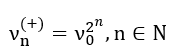
Each step of this transformation leads to a qualitative change in the nature of the process and may be interpreted as a transition to a new level of description. It is precisely this nonlinearity that prevents all processes from being reduced to a single linear scale and necessitates the introduction of additional coordinates, perceived as new dimensions.
However, structural similarity is not limited to the direction of increasing frequency. Since the considered dependence admits an inverse operation, the transition to slower and larger-scale processes can be described by sequential extraction of the square root:
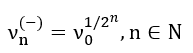
Thus, relative to the base frequency, two mutually inverse directions of scaling arise:
- increasing complexity and growth of frequency;
- slowing of processes and enlargement of structures.
Despite the difference in these directions, the relationships linking system parameters remain unchanged. This implies that structures arising at different levels may share similar principles of organization.
This reflects the fractal nature of the system under consideration.
After the formation of the temporal level, the same principle extends to spatial characteristics. Space emerges as a means of describing structural differences between levels formed through nonlinear scaling. At the same time, identical patterns may manifest both at small scales and at large-scale structures.
In particular, one may consider:
- elementary particles as stable configurations at the level of fast processes;
- cosmological structures (such as galaxies) as manifestations of the same principles at the level of slow processes.
It is important to emphasize that this does not imply identity of objects, but rather similarity of the principles underlying their organization. The mechanisms of formation may differ, while the structure of relationships between parameters remains analogous.
The next level — mass — also inherits this principle. Mass appears as a characteristic of the stability of wave configurations and is observed at both microscopic and macroscopic levels. Its interpretation depends on the scale and conditions of observation.
Within this model, consciousness plays a key role in shaping the observed picture of reality. It defines the base frequency ν₀, relative to which levels are differentiated and the interpretation of processes is established. At the same time, the underlying laws of interaction do not depend on the observer, but their physical meaning is manifested through the conditions of perception.
Thus, the following conclusions can be drawn:
- dimensions arise as a result of nonlinear transformation of wave processes;
- fractality is a consequence of the symmetry of scaling relative to the base frequency;
- observed reality is formed as a result of the coherence between the objective structure of processes and the conditions of their perception.
Conclusion
The presented philosophical approach does not aim to achieve the rigor of a formal model, but offers a coherent interpretation in which dimensions, physical quantities, and consciousness are viewed as interconnected aspects of a unified process.
At its core lies the idea that the world may be interpreted not as a static structure, but as a dynamic system of processes in which frequency relationships play a fundamental role. The repetition of processes may be perceived as time, the need for unambiguous description as the basis for introducing spatial coordinates, and the increasing complexity of processes as a possible origin of such characteristics as mass and energy.
Considering scaling as a nonlinear process further allows the observed reality to be interpreted as a hierarchical system of levels. The presence of mutually inverse directions of scaling suggests the possibility of self-similarity, which manifests as a fractal organization of structure.
In this context, consciousness may be regarded as a factor that determines the mode of interpretation of processes. It does not alter the underlying laws, but defines the conditions under which they are perceived, thereby shaping the observed picture of reality.
Such an approach provides a perspective on the consistency between mathematical description and physical reality. Mathematics, in this sense, may be viewed as a formalized expression of stable relationships arising within the structure of processes.
The ideas presented remain hypothetical and require further development. Their value lies not in definitive conclusions, but in their potential to guide the search for connections between different domains of knowledge.
Thus, both the formal and philosophical parts of the work converge on the notion that observed reality may be interpreted as the result of coherence between the structure of processes and the conditions of their perception. Within this framework, consciousness is not an external entity, but an element through which the experience of interaction with the world is structured and manifested.
Related Works and Author’s Publications
The proposed model is part of a series of interrelated works in which the conceptual foundation of the presented approach is developed step by step.
- Reflections: Belief, Disbelief. SPIRIT and Matter
https://zenodo.org/records/20032688
— a philosophical and ethical work outlining the initial ideas and the general worldview framework. - Energy as a Fundamental Reality. From Points to Processes
https://zenodo.org/records/17170686
— development of the ontological foundation, in which physical reality is considered as a set of processes rather than static objects. - Hypothesis of Wave Equilibrium: The Universe as a Balanced State of Zero
https://zenodo.org/records/19727806
— consideration of a possible mechanism for the emergence of physical reality. - Model of the Wave Structure of Matter and the Fractal Structure of the Universe
https://zenodo.org/records/19703486
— the core of the physical component of this series of works. - Consciousness as a Wave Structure: A Possible Connection Between Brain Frequencies and Perception Frequencies
https://zenodo.org/records/19839850
— exploration of the possible role of consciousness within the proposed model. - Unity of the Wave: Matter, Energy, and Consciousness as Aspects of Frequency
https://zenodo.org/records/19839673
— synthesis of key ideas and an attempt to unify different aspects of the model. - Simple Wave Interpretation of Gravity and the Casimir Effect
https://zenodo.org/records/20117425
— interpretation of gravitational effects within the wave-based approach.
The present work builds upon the results outlined in these publications and further develops them within a unified interpretative framework.


 1С: Бухгалтерия 8 для Казахстана. Учебная версия.